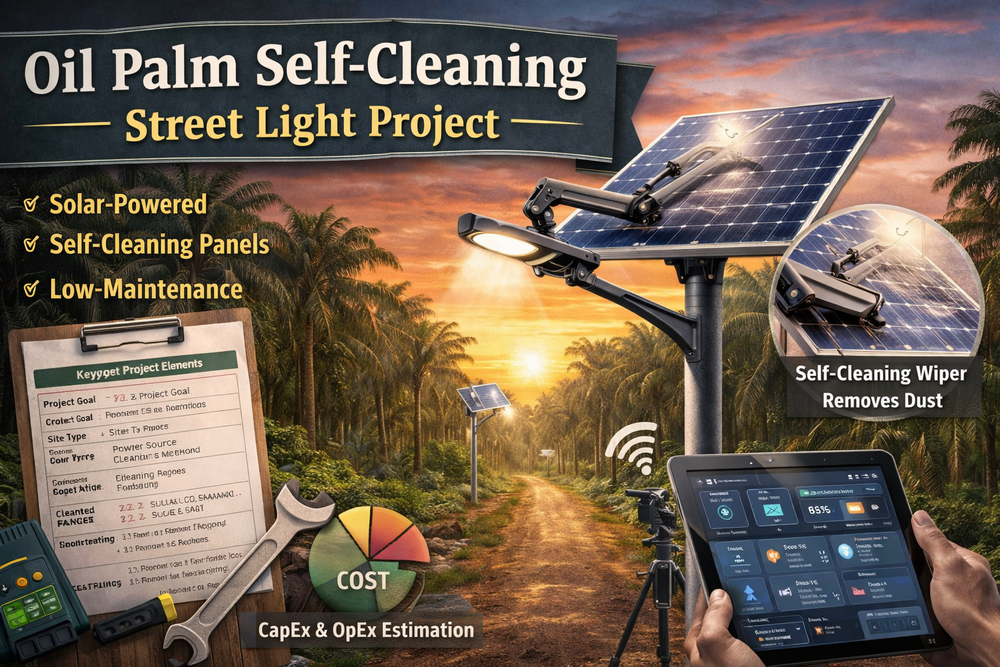
oil palm self-cleaning street light project
Oil Palm Self-Cleaning Street Light Project
Introduction
An oil palm self-cleaning street light project is a smart way to keep outdoor lights bright with less manual work. It mixes solar power, strong LED lighting, and a cleaning system that helps panels stay clear. That matters because dust, pollen, and oily residue can block sunlight and cut charging power. In farm roads and plantation zones, that problem can show up fast. Some projects also use anti-dust coatings or simple wiping tools to reduce buildup. One vendor case study describes palm-belt installs where contamination can reduce solar efficiency over time, and self-cleaning features aim to limit that loss. In this guide, you’ll learn the core idea, parts, and planning steps. You’ll also get a clear “project profile” table, plus real-world checklists. Everything is written in simple English. It’s designed for the USA audience too, including safety rules and budgeting basics.

High-efficiency solar panels designed for the Oil Palm Self-Cleaning Street Light Project.
What an Oil Palm Self-Cleaning Street Light Project Means
The phrase oil palm self-cleaning street light project is used in two common ways. First, it can describe lights installed in or near oil palm areas. These places have dust, pollen, humidity, and sometimes oily mist from processing. That mix can coat a solar panel and reduce charging. A self-cleaning feature helps remove buildup without daily labor. Second, some writers use “oil palm” to describe materials or coatings linked to palm-derived chemistry. These coatings can be hydrophobic, meaning water beads and carries dirt away. In both cases, the goal is the same: steady light output with fewer site visits. Think of it as “lighting that takes care of itself.” It is not magic. It is just better design, better surfaces, and smarter maintenance planning.
Why Dust and Grime Are a Big Deal for Solar Street Lights
Solar street lights live and die by solar input. When panels get dirty, they produce less energy. When energy drops, batteries charge less. When batteries charge less, lights dim earlier. In tropical and agricultural zones, panel soiling can happen quickly. A project write-up focused on oil palm regions highlights dust and residue as key reasons normal solar lights lose performance and need frequent cleaning. The oil palm self-cleaning street light project idea solves that problem by reducing soiling impact. It does this with coatings, wipers, brushes, or scheduled cleaning cycles. Some products even pair cleaning with remote monitoring. In the USA, you may face different grime sources, like road dust, salt spray, wildfire ash, or pollen. The principle stays the same. Cleaner panels mean more reliable lighting and fewer truck rolls.

Illuminating rural farm lanes with sustainable solar technology.
Core Parts You’ll See in Most Designs
A typical oil palm self-cleaning street light project includes five main blocks. Block one is the LED luminaire, which provides bright, efficient light. Block two is the solar panel, sized for your sun hours. Block three is the battery, often LiFePO₄ in modern builds. Block four is the controller, which manages charging and dimming. Block five is the cleaning layer, which can be passive or active. Active systems can use a small motorized wiper or brush. Passive systems can use anti-dust coatings and water-shedding surfaces. Some vendors describe robotic or automated cleaning cycles for panels in dusty farm environments. Others focus on “automatic clean” solar light systems tied to IoT control. Your design choice should match site reality. A quiet rural lane may need simple coatings. A dusty work road may need active wiping.
Self-Cleaning Methods Explained in Simple Terms
Self-cleaning can mean different things, so it helps to name them clearly. Method one is “hydrophobic coating.” It makes water bead up and roll off, carrying dust with it. Some articles describe palm-linked hydrophobic materials as part of self-cleaning concepts. Method two is “wiper or brush.” A small mechanism sweeps the panel on a schedule. Vendor descriptions for agricultural installs mention automated cleaning arms or wiping structures. Method three is “design-based shedding.” That means panel tilt angles, drip edges, and smooth surfaces that reduce dirt sticking. Method four is “maintenance-light workflow,” where the system detects reduced charging and triggers a clean cycle. IoT-controlled systems are marketed with remote commands and monitoring. A good oil palm self-cleaning street light project picks one method first. Then it adds another only if needed. Simple is often more reliable.
Project Profile Table
| Profile Item | What It Covers | Simple Target | Notes |
|---|---|---|---|
| Project Goal | Safer roads, fewer outages | 95%+ nights lit | Define success early |
| Site Type | Farm roads, rural lanes, yards | Dusty or remote | Match design to grime |
| Power Source | Solar + battery | Off-grid ready | Avoid trenching costs |
| Light Output | LED watt + optics | Based on spacing | Use photometric plan |
| Cleaning Method | Coating or wiper | Low labor visits | Coatings shed; wipers scrub |
| Controls | Dimming + timers | Night profiles | Saves battery on low traffic |
| Monitoring | Optional IoT | Alerts + reports | Useful for large rollouts |
| Materials | Pole + housing | Corrosion resistant | Coastal and salty roads matter |
| Compliance | Safety + electrical | Local codes | Plan permits in advance |
| Budget Range | CAPEX + OPEX | Per pole estimate | Add spares and install labor |
How to Plan the Map and Layout
Layout decides whether your oil palm self-cleaning street light project feels “bright and safe” or “patchy and weak.” Start with the road type. Is it a straight farm lane, a curve-heavy access road, or a parking area? Next, choose pole height. Taller poles cover more area but need stronger foundations. Then choose spacing. Wider spacing cuts cost but can create dark gaps. Good projects use photometric planning to avoid glare and shadows. In dusty zones, panel tilt matters too. A better angle can help rain wash the surface and reduce buildup. That supports the self-cleaning goal. If you have trees, think about shade. Even partial shade can reduce charging. For a USA plan, also think about snow. A tilt can help snow slide off. Combine that with a coating and you get a simple, passive cleaning boost. That makes the oil palm self-cleaning street light project easier to maintain.
Budget and Cost Drivers
People often ask, “How much will it cost?” The answer depends on hardware, labor, and support. For an oil palm self-cleaning street light project, the cleaning layer is a key cost driver. Coatings tend to be cheaper than motorized wiping, but they may need renewal. Wipers cost more upfront, but they can reduce manual cleaning visits. Systems marketed as IoT-controlled or auto-cleaning usually cost more, but they can lower the cost of long-term monitoring. Your battery size also matters a lot. Bigger batteries give longer backup. They also raise price and weight. Add in pole, foundation, wiring, and install time. In the USA, permitting and certified electrical work can add cost too. Budget for spares, like controllers and sensors. Also budget for a simple inspection schedule. Self-cleaning reduces work. It does not remove it fully. That’s a realistic way to sell the project.

Modern LiFePO4 batteries used in solar light projects.
Reliability and Maintenance
A strong oil palm self-cleaning street light project is built for “boring reliability.” That means predictable lighting, even when weather is messy. The best maintenance plan is short and clear. First, schedule visual checks. Look for cracked lenses, loose bolts, and blocked panels. Second, check battery health seasonally. Third, review controller settings for dimming and timing. Fourth, confirm the cleaning layer is working. Coatings should still bead water. Wipers should move smoothly and quietly. Vendor case descriptions emphasize that plantation environments can be harsh, with humidity and surface contamination. That’s why sealing and corrosion resistance matter. If you add IoT, you can track performance and receive alerts, but you must also secure access and manage data. In short, self-cleaning reduces labor. It does not cancel the need for basic care. Planning that honesty builds trust.
Environmental Story and “Why Oil Palm” Shows Up
The words “oil palm” can confuse people, so you should explain it carefully. Sometimes, “oil palm” means the environment where the lights are installed. That’s common in plantation road projects. Other times, it refers to palm-related materials used in coatings or sustainability storytelling. Articles describe hydrophobic coatings that can reduce dirt buildup, and some link this idea to sustainable sourcing. There are also “oil palm lamp” style stories about using agricultural waste for lighting solutions. Not every story is equally technical, so be careful with claims. For a USA audience, focus on what you can prove: solar + LED cuts grid load, and self-cleaning reduces maintenance trips. That can reduce fuel use and labor costs. A clear, honest message supports a credible oil palm self-cleaning street light project narrative.
Safety, Rules, and Trust Factors for USA Readers
If you want USA traffic and trust, you must address safety and reliability plainly. For any oil palm self-cleaning street light project, talk about glare control, stable light levels, and safe installation. Public lighting often requires local approvals. Many locations also expect weather-rated enclosures and proper grounding. If the system is near roads, follow traffic safety rules during installs. If it is in rural property, confirm easements and access rights. If you add remote monitoring, explain what data is collected and why. IoT systems are often marketed with remote command features, so security and access control matter. Also explain realistic limits. Self-cleaning helps with dust. It will not fix a shaded panel, a broken battery, or vandal damage. A calm, honest tone boosts E-E-A-T. It also keeps customers happy after installation. That’s how a project earns good reviews over time.
Step-by-Step Project Blueprint
Here is a simple blueprint you can follow for an oil palm self-cleaning street light project. Step one: define the problem. Is it dark roads, high maintenance cost, or power access limits? Step two: map the sites and count poles. Step three: collect sun data and weather risks, like snow, salt, or storms. Step four: choose lighting levels and spacing. Step five: pick the cleaning method that fits the dirt type. Dust and pollen may work with coatings. Heavy grime may need wiping. Step six: choose battery backup days. Step seven: plan foundations and conduit. Step eight: run a pilot with 5–10 units. Step nine: track results for 60–90 days. Step ten: scale with lessons learned. If you use IoT, set roles and access rules early. A blueprint like this keeps the project controlled, safe, and easier to fund.
Measuring Success
To judge an oil palm self-cleaning street light project, you need simple metrics. First, “uptime.” How many nights are fully lit? Second, “brightness stability.” Are there dim periods before dawn? Third, “maintenance visits.” How many truck rolls per month? Fourth, “panel cleanliness.” You can score it with photos on a schedule. Fifth, “battery health.” Track voltage trends over seasons. If you have remote monitoring, you can log charging curves and identify weak units early. Also measure the human side. Do workers feel safer? Do drivers report better visibility? In the USA, safety impact matters for grants and community support. A simple before-and-after survey can help. Keep your claims modest and evidence-based. If your numbers show fewer visits and stable lighting, you have a strong story. That story is what people share online. And shared stories often bring the most natural traffic.
FAQs
1) What is an oil palm self-cleaning street light project in one sentence?
An oil palm self-cleaning street light project is a solar street lighting plan that includes a feature to keep solar panels cleaner, so lights stay reliable with less manual cleaning.
2) Do self-cleaning street lights always use palm oil or palm waste?
No. Many projects use “oil palm” to describe the location, like plantation roads. Some articles also discuss palm-linked materials in coatings, but that depends on the supplier and design.
3) Which cleaning method is best: coating or wiper?
Coatings are simpler and cheaper, and they help dirt slide off with rain. Wipers can remove heavier grime, but they add moving parts and cost.
4) Can this work in the USA, where there is snow?
Yes, but you must plan panel tilt, weather sealing, and battery sizing for winter. A good tilt can also help snow shed faster, which supports the “self-cleaning” goal.
5) Does IoT monitoring matter for a small rollout?
For a few lights, manual checks may be enough. For many poles, monitoring can cut response time and help spot weak batteries.
6) What is the biggest reason these projects fail?
The top causes are poor solar sizing, unexpected shading, and weak maintenance planning. Self-cleaning helps, but it cannot overcome bad placement or undersized batteries.
Conclusion
A well-planned oil palm self-cleaning street light project can feel like a small miracle on a dark road. The lights turn on every night. The panels stay cleaner. The site needs fewer visits. That saves time, fuel, and stress. The key is choosing the right self-cleaning method for your dirt type, then matching your solar and battery sizes to real weather. Vendor case studies in oil palm regions highlight why dust and residue are a serious issue, and why cleaning features can protect performance. If you’re building for the USA, keep the message honest and safety-focused. Start with a pilot, track results, and expand with confidence. If you want, tell me your use-case (city street, rural road, parking lot, or farm lane) and your state, and I’ll generate a custom outline with exact H2s, a stronger project table, and a “pilot plan” that fits your climate.
About the Author